
The Karuna Universal Weaving Facility marks a milestone in Nepal’s handmade carpet industry. Launched by Karnor Carpets and EPSA-Nepal and supported by STEP Nepal, it is the country’s first fully inclusive and fair-trade weaving centre, opening up new pathways toward dignified employment for artisans with disabilities.
A review of labour-market data by the ILO (International Labour Organization) indicates that globally persons with disabilities are employed at about half the rate of non-disabled workers and are significantly more likely to be outside the labour force. In Nepal, that exclusion is reinforced by stigma, limited infrastructure, and underreporting: while the 2021 census records 2.2% of the population as living with disabilities, advocacy groups estimate the real figure to be far higher.
Although Nepal ratified the UN Convention on the Rights of Persons with Disabilities (CRPD) in 2009, many workplaces—especially outside urban areas—remain physically inaccessible. There is also no publicly available data on disability inclusion in Nepal’s handmade-carpet industry, suggesting that artisans with disabilities have been largely unrepresented in formal workshops. The Karuna Facility challenges this pattern.
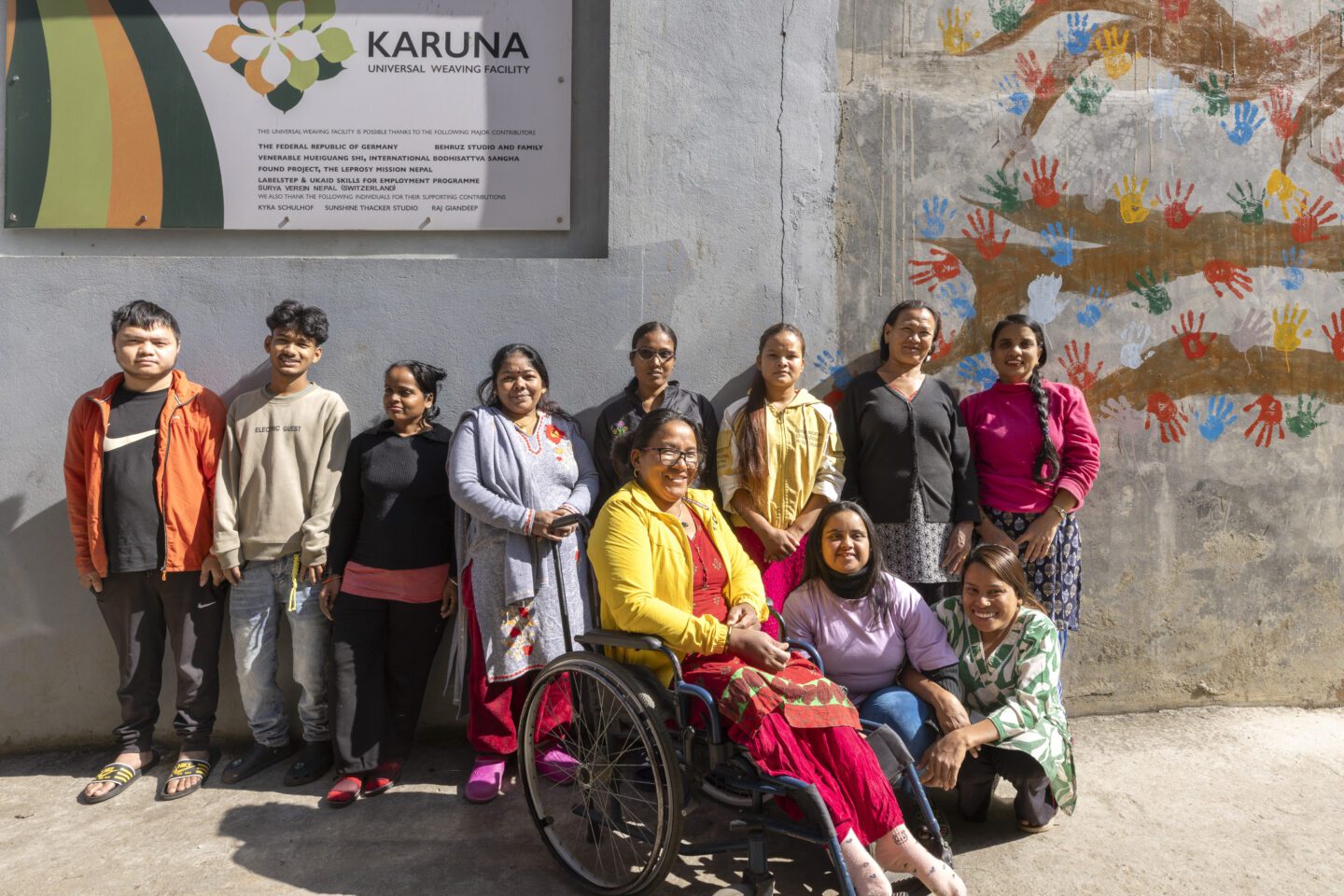
Designed for accessibility from the outset, the centre demonstrates that high-quality craftsmanship and inclusive employment can operate side by side. Today, the centre provides training to 55 artisans and employs 17 artisans with disabilities, with additional cohorts preparing to join. Under STEP’s rigorous 10-point Fair Trade Standard—covering labour rights, occupational safety, social protections, and environmental safeguards—Karuna operates as an inclusive, rights-based weaving centre. Continued STEP support ensures transparent auditing and strong worker protections as the facility grows.
Building Opportunity Through a Shared Vision
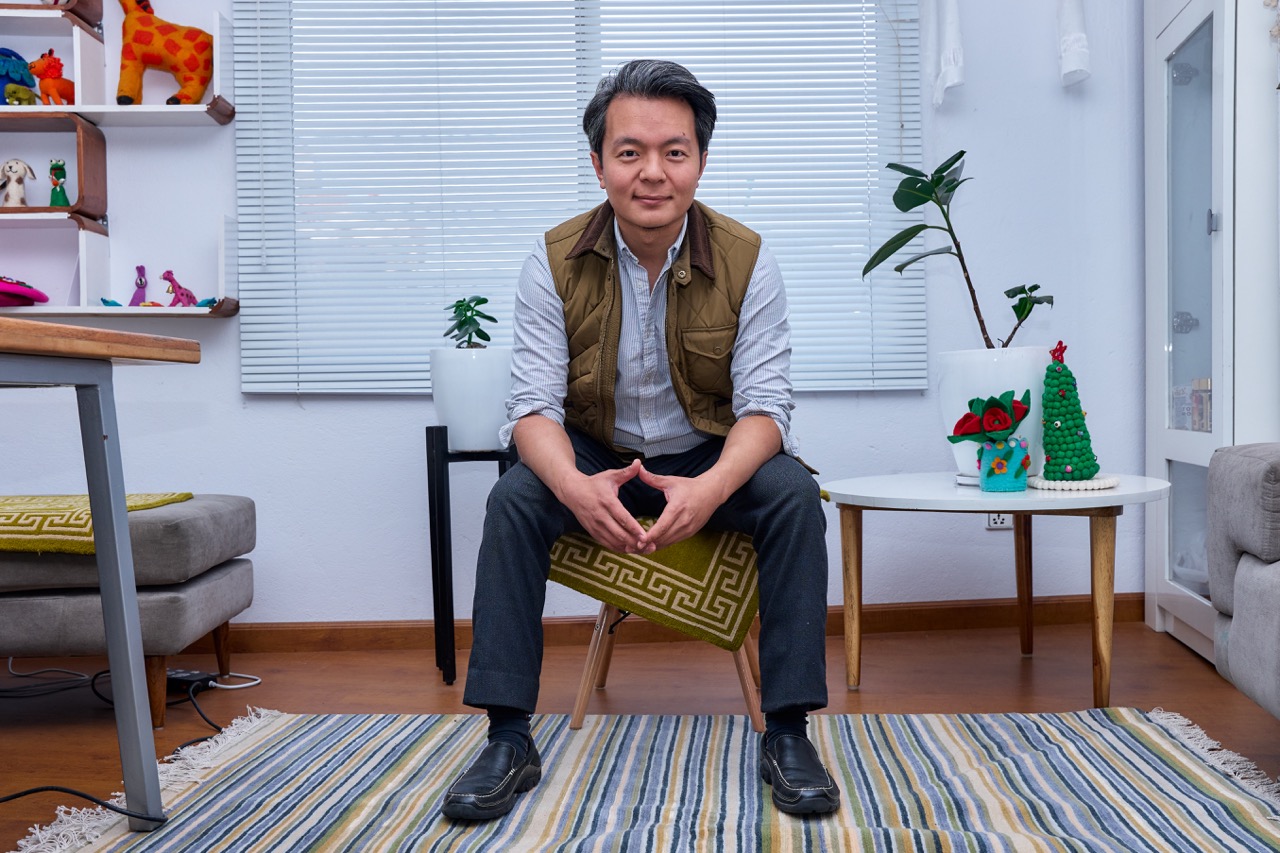
The Karuna Universal Weaving Facility grew out of the collaboration between Karnor Carpets and Entire Power for Social Action (EPSA-Nepal). Urgyen Wangchuk, Creative Director of Karnor Carpets, brought his company’s expertise in technical precision and knowledge of Tibetan rugs; while Sangita Pant, founder and Director of EPSA, comes from a background of leading an organisation run by and for people with disabilities—work informed by her own experience of being dismissed from a teaching job after acquiring a disability in early adulthood. As she puts it, “My goal has always been to create sustainable livelihoods for people with disabilities who continue to face stigma and discrimination.”
“My goal has always been to create sustainable livelihoods for people with disabilities who continue to face stigma and discrimination.”
— Sangita Pant, Founder of EPSA; Co-Founder of Karuna
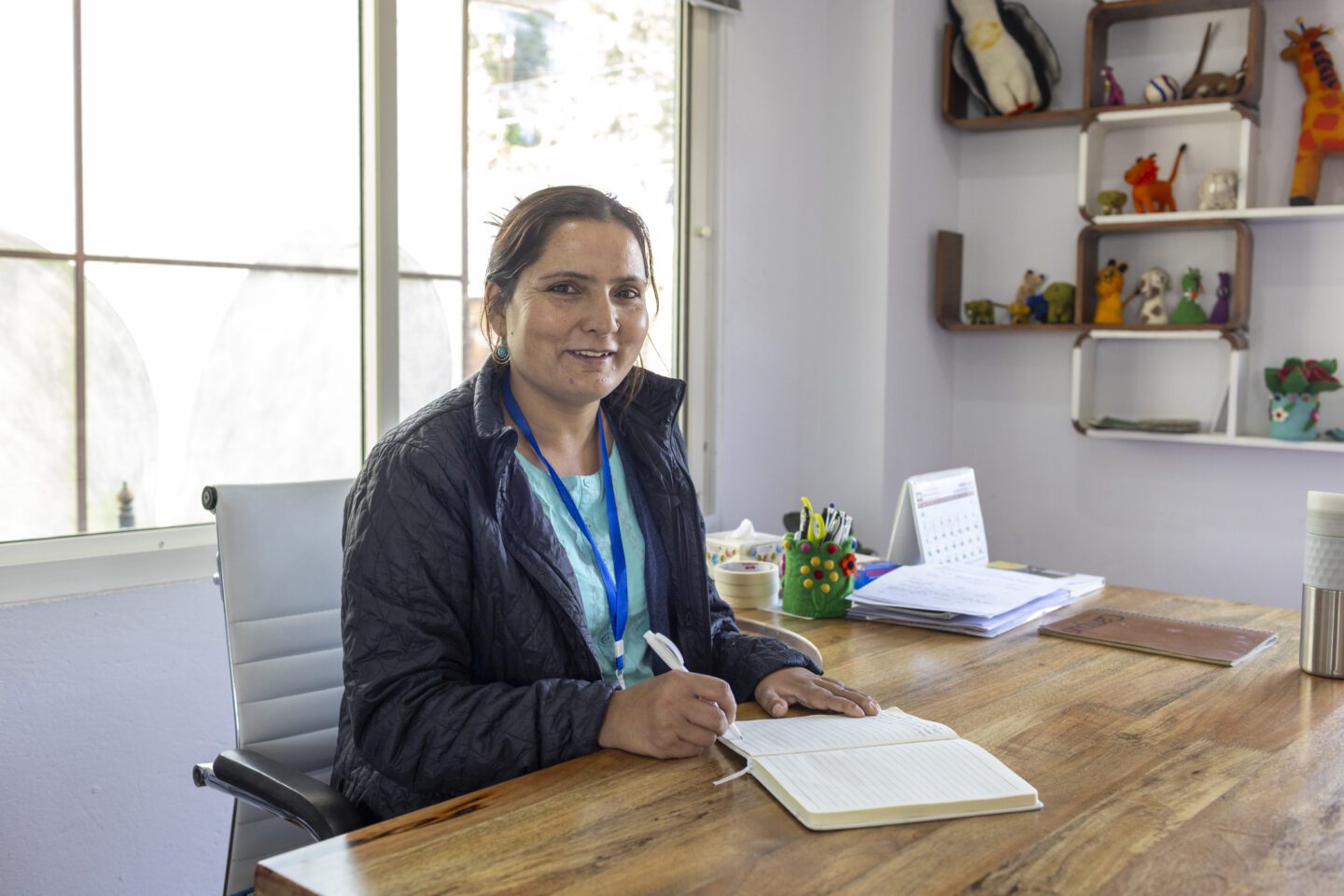
Both saw that Nepal’s carpet industry, one of the country’s most important craft sectors, offered real potential to create skilled employment for people who are often excluded from the labour market. In 2022, Karnor and EPSA formalised their partnership to establish a dedicated, fully accessible weaving centre on EPSA’s premises in Tarkeshwor. “Karuna started as an initiative to expand the carpet industry to include job accessibility to persons with disabilities,” Urgyen recalls. “We started by training four women with disabilities as a pilot project in late 2019. After a two year gap due to Covid-19 lockdowns, we were so encouraged by the first few trainees that, in 2022, we expanded our vision to build this wonderful wheelchair-accessible weaving centre called ‘Karuna’.”
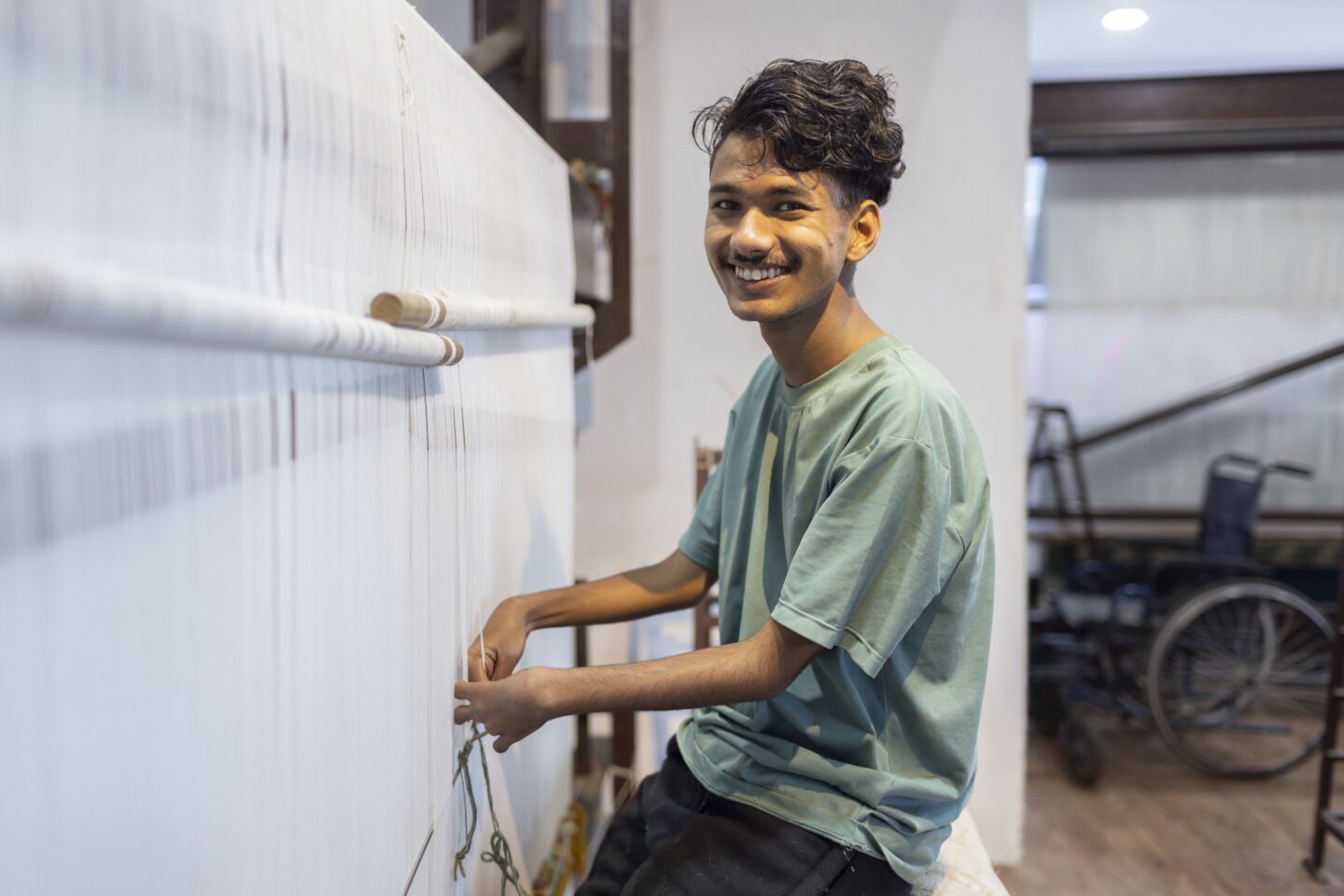
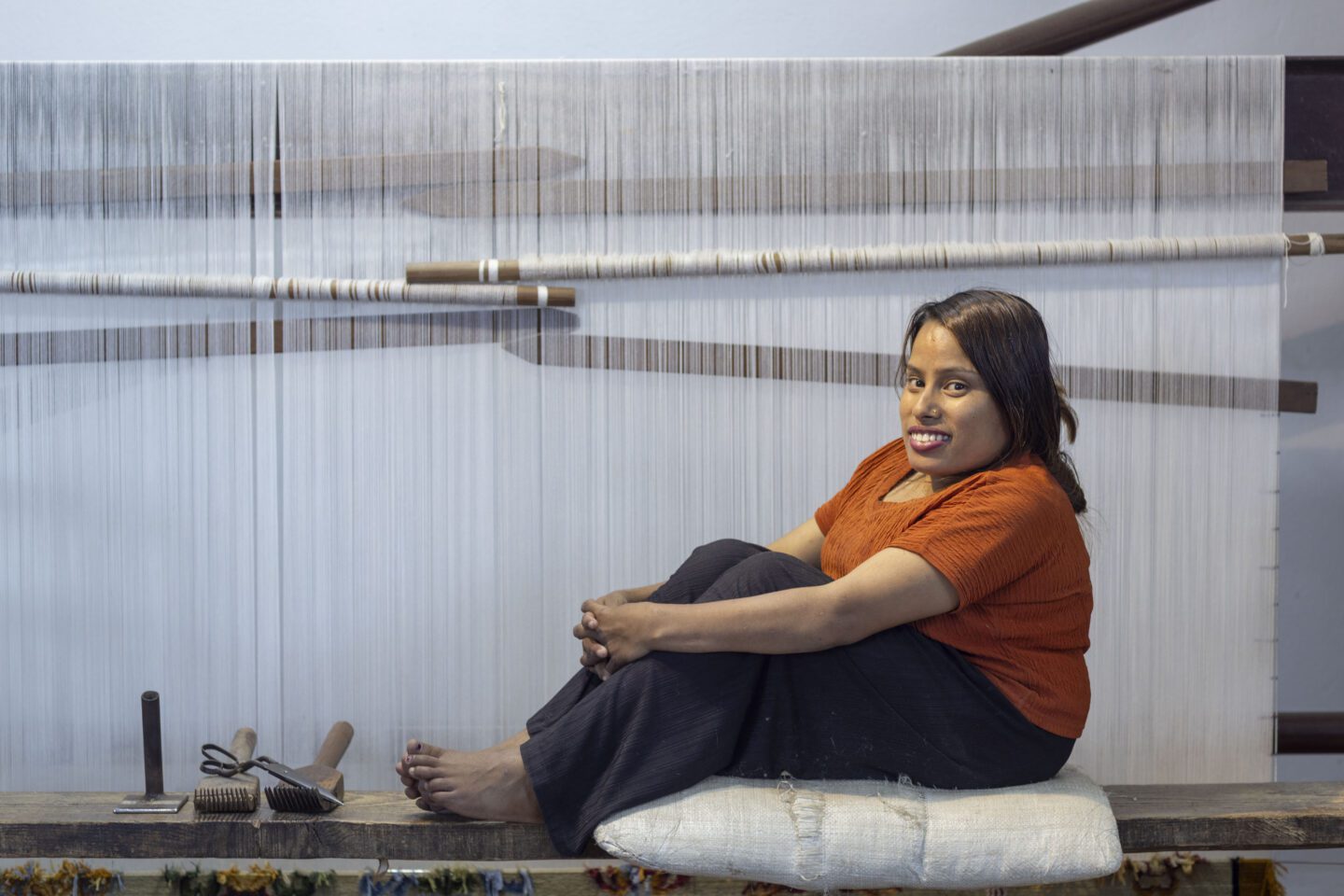
Label STEP supported the first training cohort and aspects of the facility’s set-up, offering technical guidance on fair working conditions, accessibility, and worker rights. Completed in 2023 and named after the Nepali word karuna, meaning “compassion,” the centre now serves as a practical model for inclusive and rights-based employment within Nepal’s handmade carpet sector.
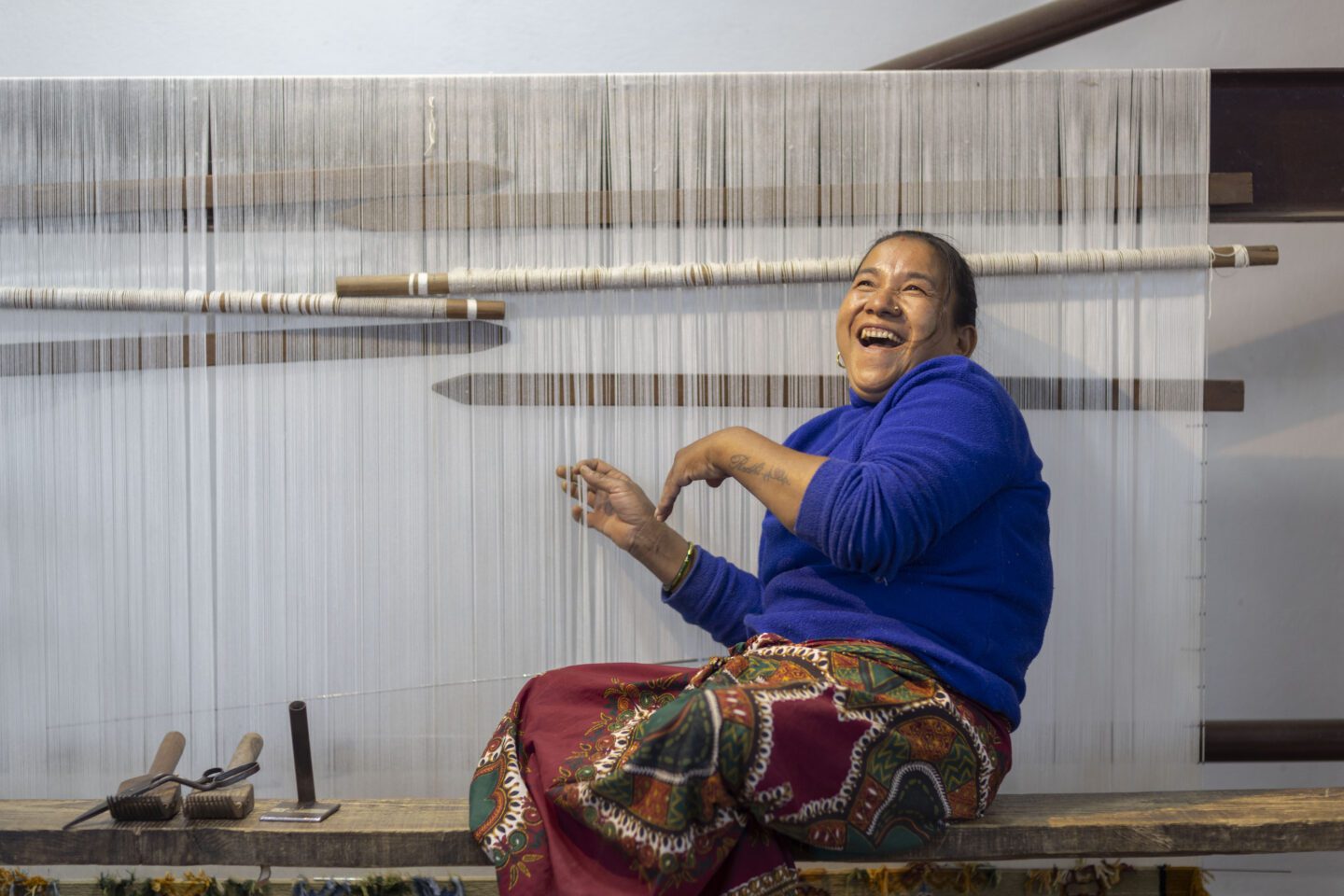
“Karuna started as an initiative to expand the carpet industry to include job accessibility to persons with disabilities. We started by training four women with disabilities as a pilot project in late 2019. After a two year gap due to Covid-19 lockdowns, we were so encouraged by the first few trainees that in 2022 we expanded our vision to build this wonderful wheelchair-accessible weaving centre called ‘Karuna’.”
— Urgyen Wangchuk, Co-Founder of Karuna and Creative Director of Karnor Carpets
A Workshop Built for Inclusion
Karuna is also the first weaving centre in Nepal constructed entirely around Universal Design principles. The weaving floor, kitchen, living quarters, and circulation spaces were planned to be accessible, understandable, and usable for people with varied mobility and sensory needs. Some of Karuna’s Universal Design features include:
- Wheelchair-accessible ramps with handrails
- An accessible bathroom equipped with handrails
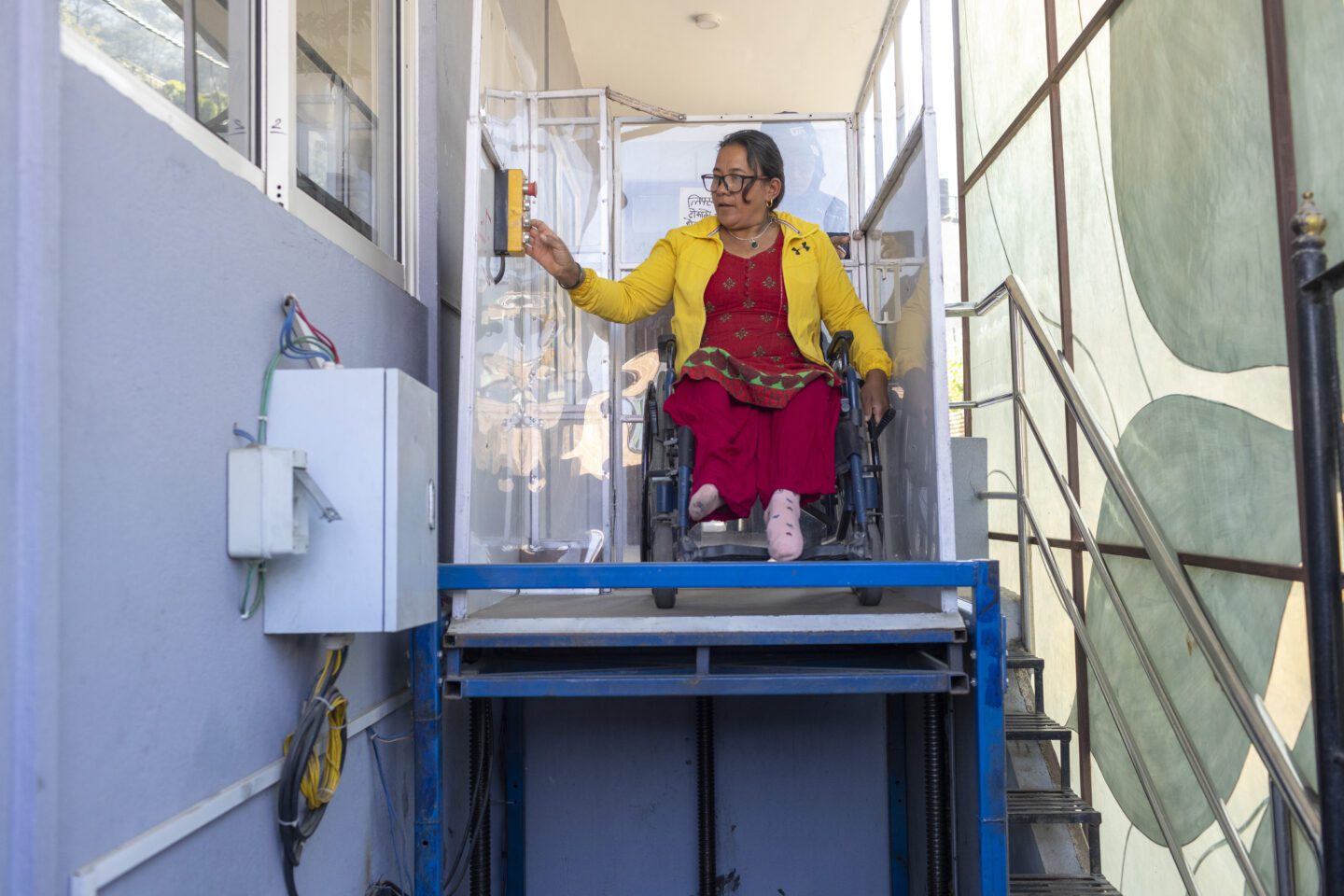
- A locally engineered wheelchair lift
- Non-obstructive doorways and barrier-free pathways
- Accessible placement of light switches and adjustable tables
In addition to this, with STEP Nepal’s technical support, loom heights and layouts were adjusted to accommodate a range of mobility and sensory needs.
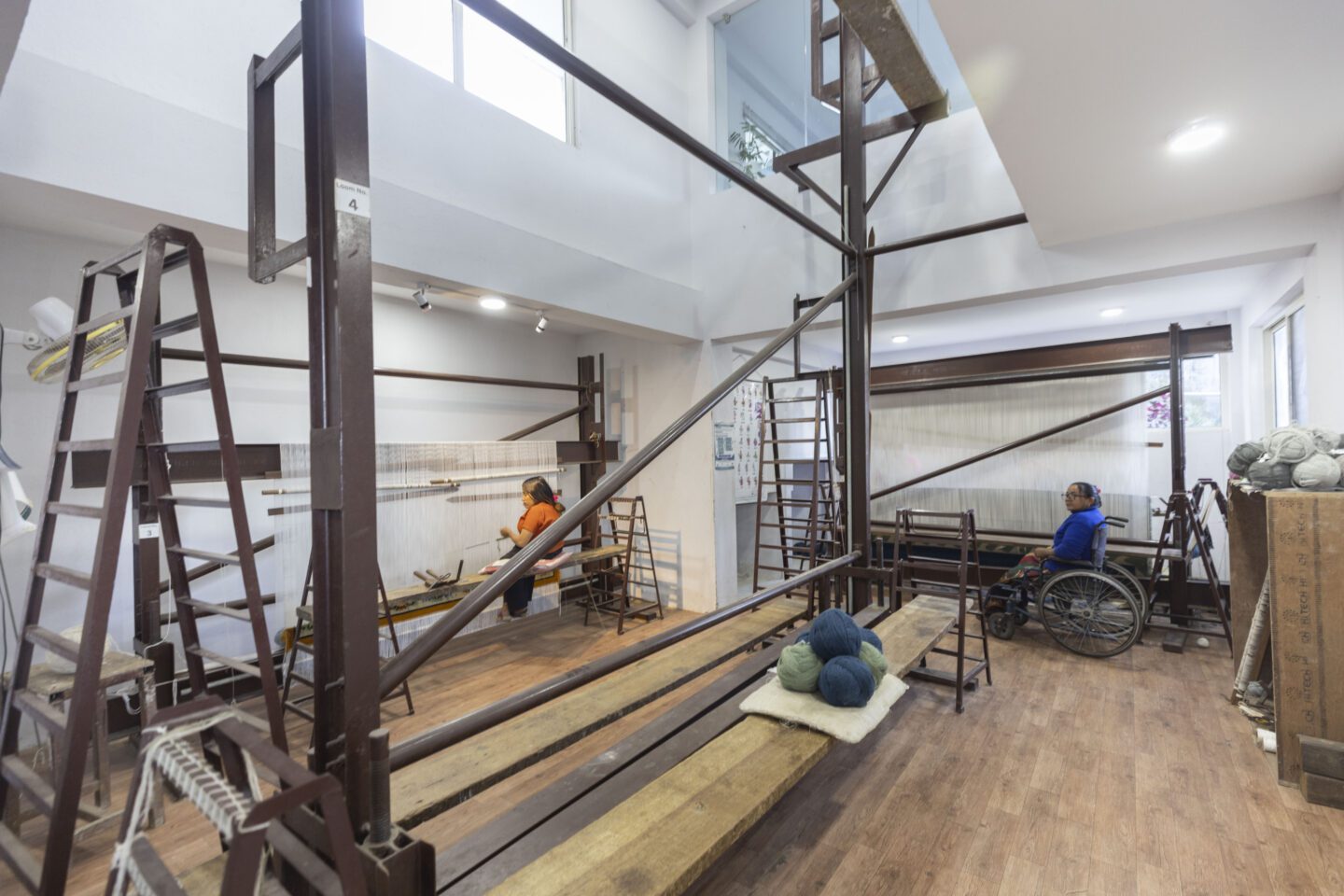
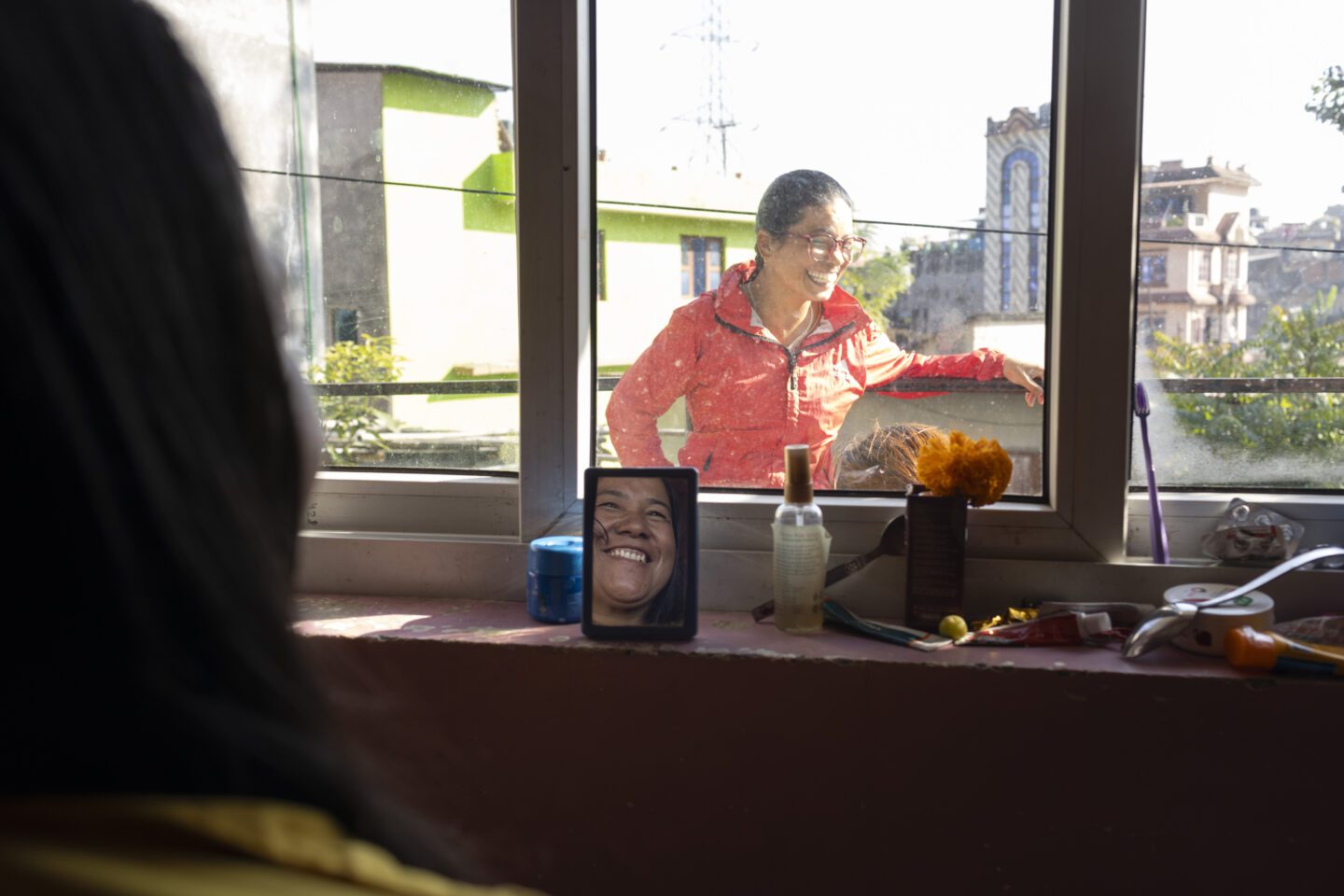
Artisans come from across Nepal and can either stay on the premises or rent nearby rooms depending on their needs. And in a testament to the success of these designs, many of the weavers do choose to live in the dormitories provided by EPSA-Nepal, where accommodation and three daily meals are offered free of cost. This is funded in part through EPSA’s NGO status, which allows it to operate through a mix of charitable support and income-generation programs—including knitting, felt production, and handicrafts—that help sustain its services for people with disabilities. This model ensures that training and employment at Karuna remain accessible to those who might otherwise be unable to relocate or afford basic living expenses.
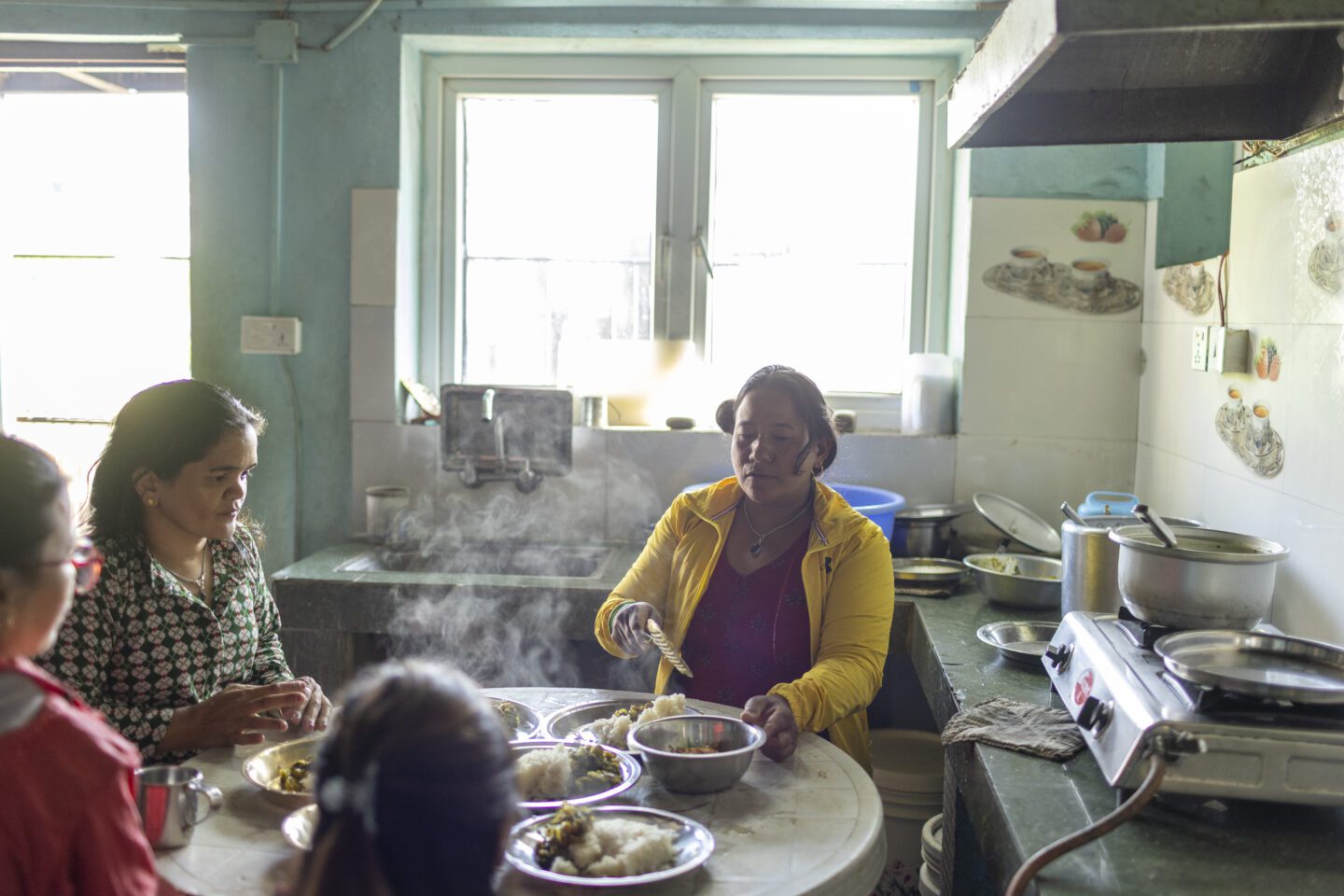
The first group of artisans received tailored training in Tibetan rug-making traditions, with STEP participating in the training of the initial cohort of 15 weavers in 2023–24. Today, Karuna produces hand-knotted Tibetan rugs at 40–120 knots per square inch in different materials—a demonstration that technical precision and accessible design can reinforce, rather than limit, one another.
Artisans at Karuna: Work, Skills, and Opportunity
Behind the looms, the Karuna facility is shaped by the lives of the people who work there—many of whom previously faced barriers to accessing stable employment. Some, like Meena Nepali, 25, came from rural districts where agriculture is the main source of income and where opportunities for persons with disabilities are scarce. After completing her school education and moving to Kathmandu through a family connection, Meena completed a six-month carpet-weaving training. For the past one and a half years she has worked consistently at Karuna, sending part of her income home and balancing her educational background with practical skills.
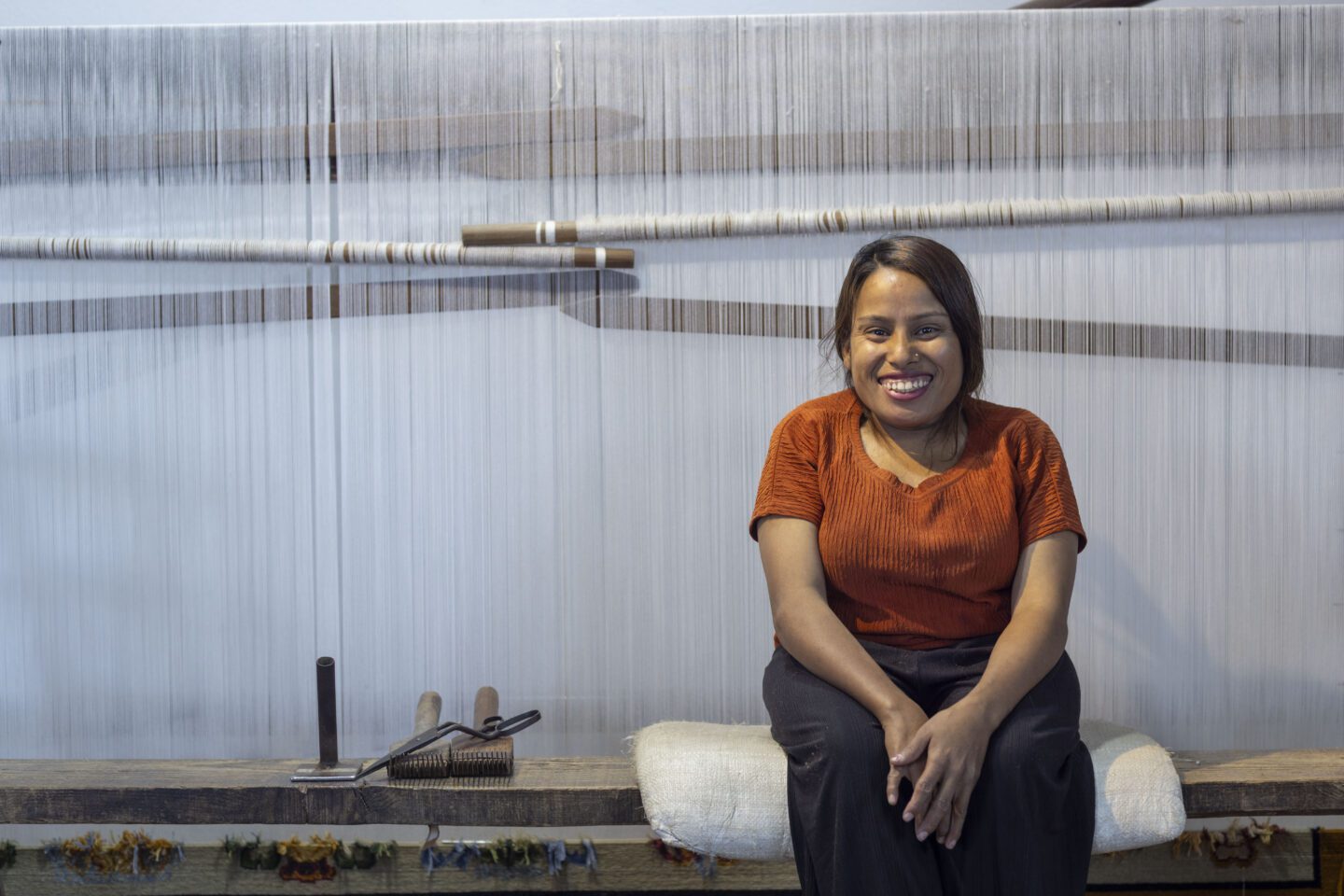
Others arrived after previous jobs were cut short because of their disability. Pabitra Parajuli, 28, from Chitwan, had been removed from past positions for that reason. She has been weaving for two years and now manages complex designs. Her income has allowed her to open a savings account and plan for the future, while working in an environment where colleagues understand her experience.
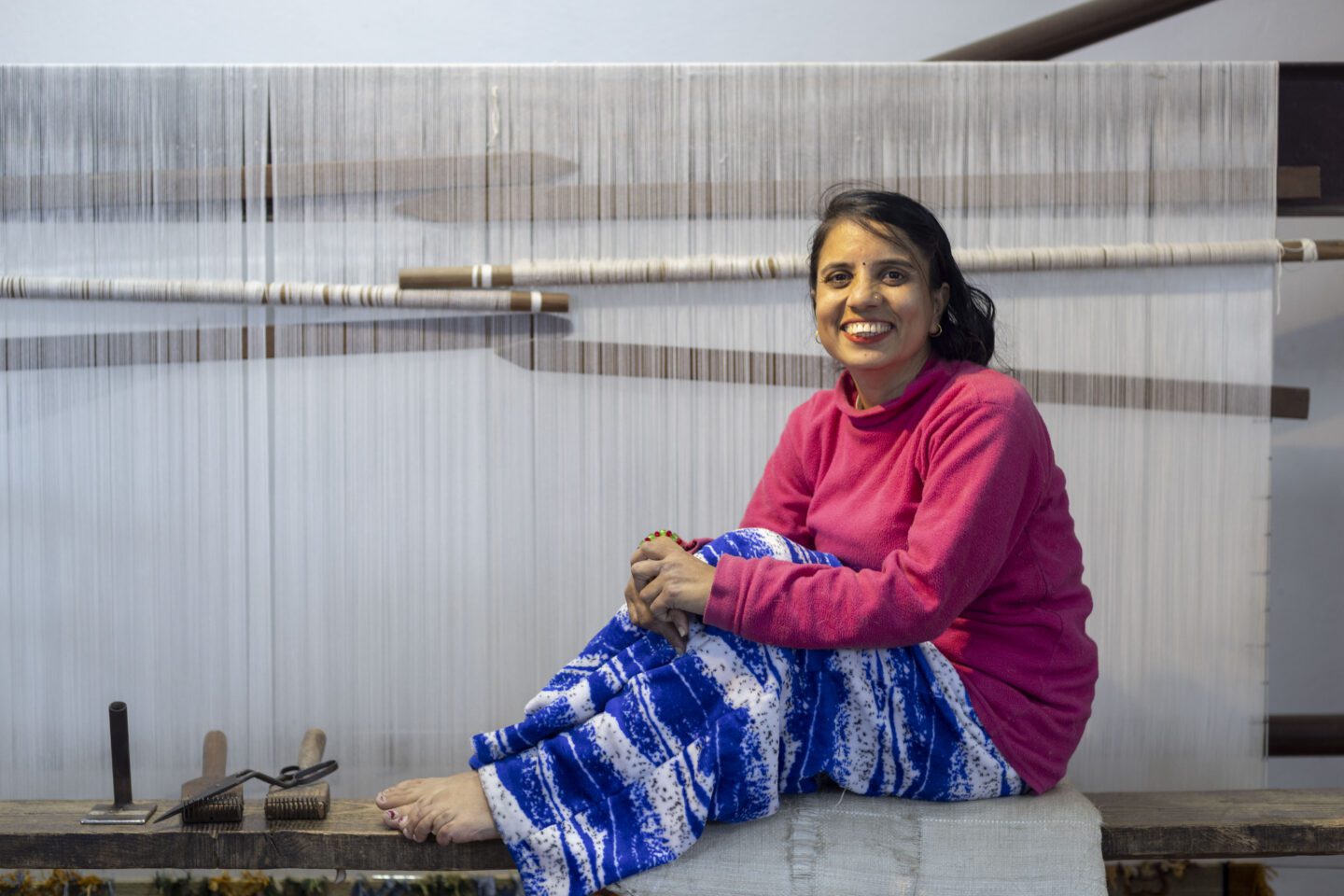
Newer arrivals, like Ritu Kamat, 27, and Subhadra Mahato, 25, joined Karuna after trying to establish livelihoods through sewing work in their home communities, often without being paid reliably. Through word-of-mouth networks, they heard about EPSA and travelled to Kathmandu to join a full-day carpet-weaving training. For them, training at Karuna is not only about acquiring skills; it is a chance to contribute to household income in regions where alternative employment is limited. Some trainees are in the early stages of their journey. Tika Guragain, 20, from Jhapa, came to Karuna with the explicit goal of saving for university, after his family could no longer afford to fund further studies. Training at Karuna offers him a way to build an income base while developing a skilled trade.
A Path to Independence
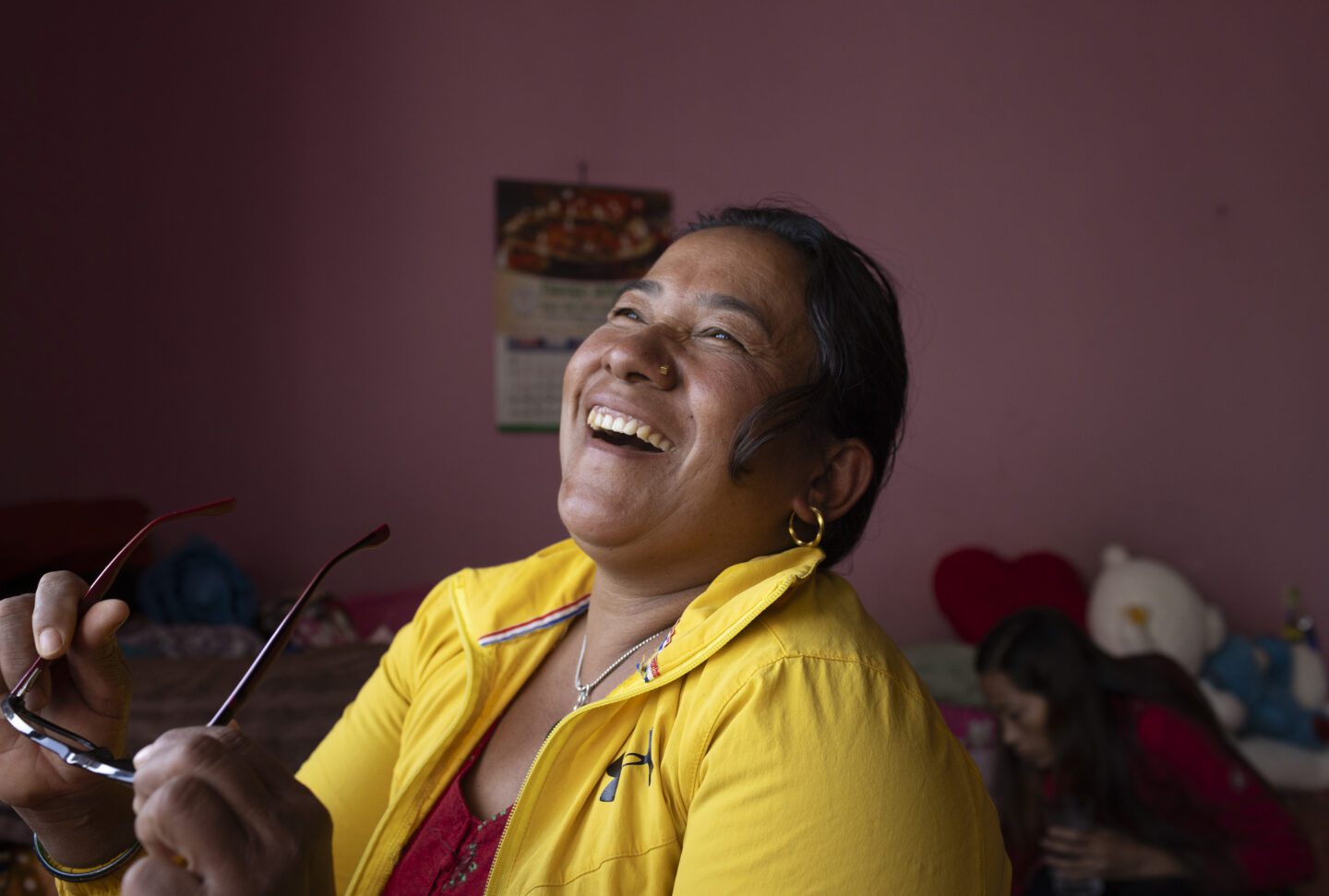
Phulmaya Tamang, 43, came to EPSA eight years ago after working in embroidery in Sanepa. Originally from Ramechhap and using a wheelchair since childhood due to polio, she had few opportunities for stable work. At EPSA she began producing small knitted items—her first steady source of income. When the Karuna Universal Weaving Facility opened on the same premises, Phulmaya joined the training and transitioned from knitting to carpet weaving. The new skills offered her a clearer pathway to not only regular earnings but also greater autonomy, she explains: “I hope to open a small grocery shop. My experience at EPSA and Karuna has given me purpose and independence.”
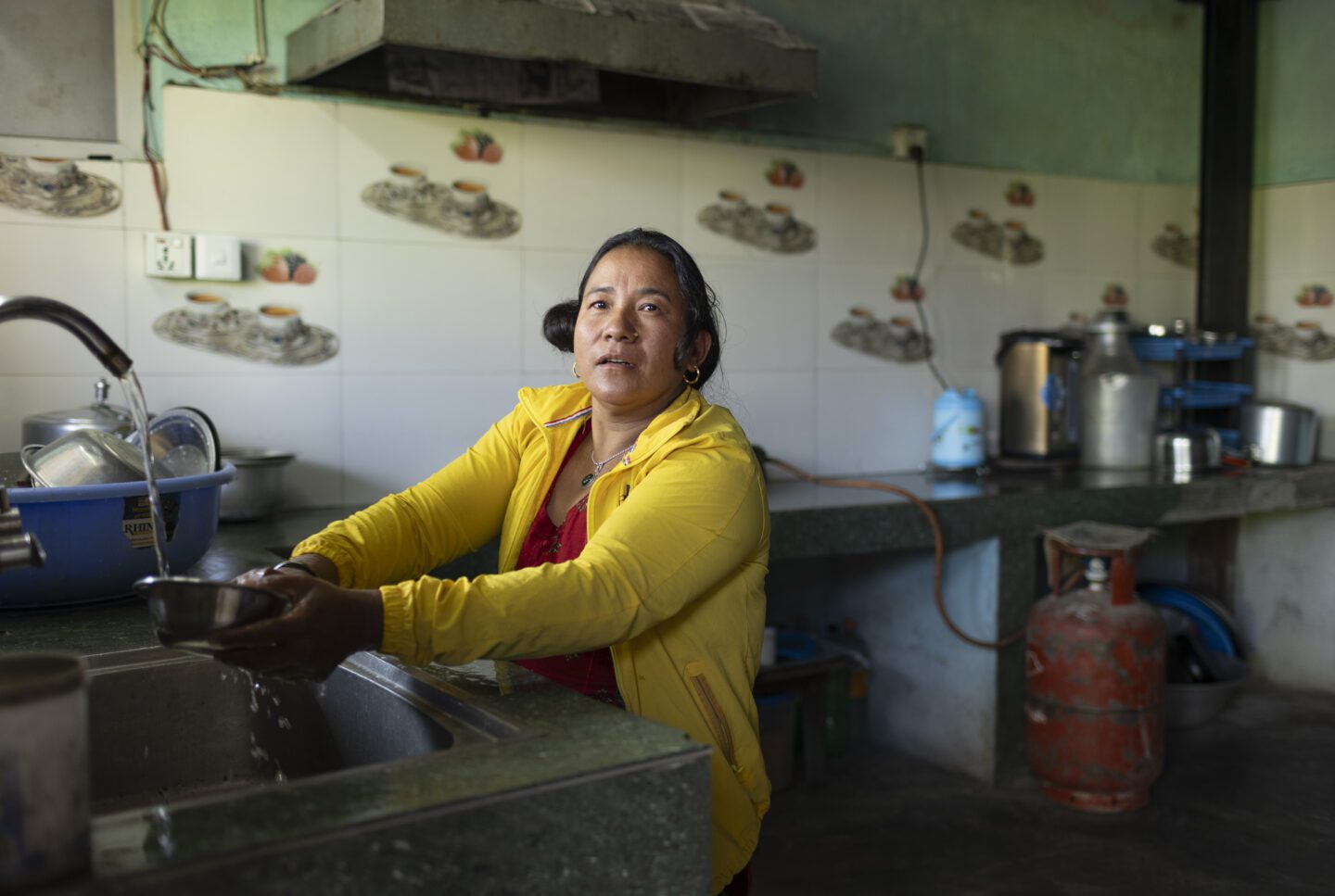
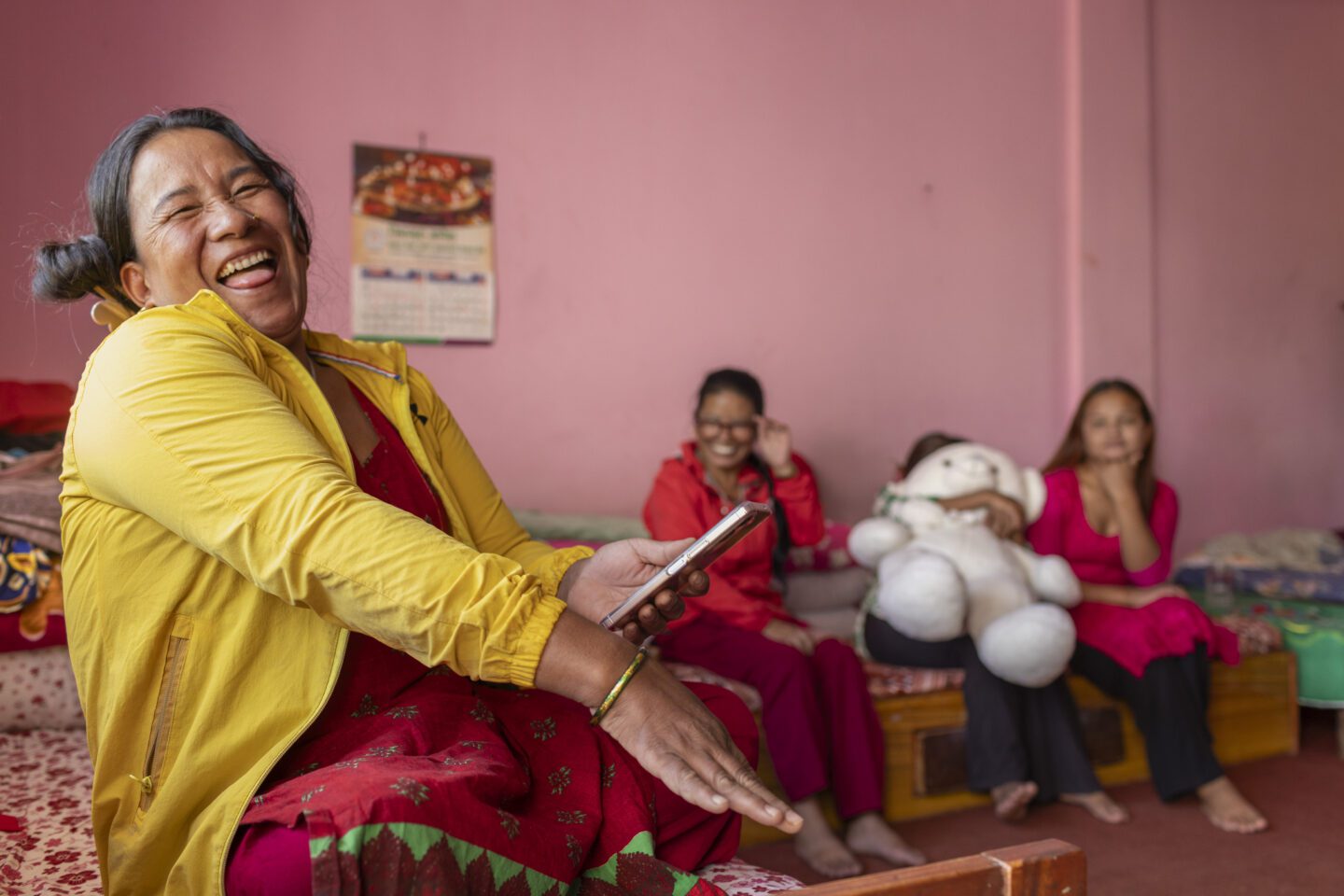
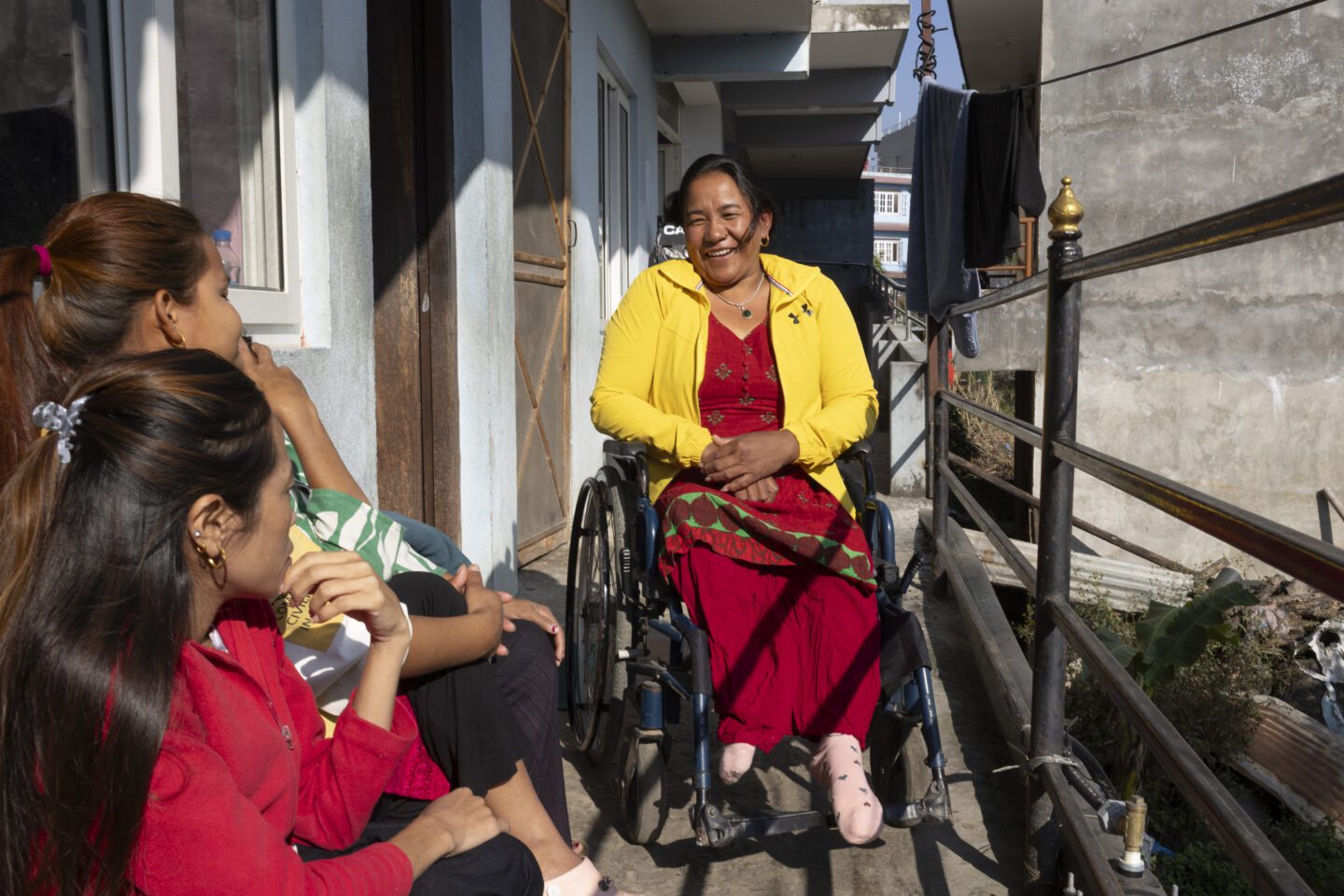
“My eyesight brings challenges, but I am committed to weaving for as long as I can. One day, I hope to open a small grocery shop. My experience at EPSA and Karuna has given me purpose and independence, and I’m grateful for the chance to build my own livelihood.”
— Phulmaya Tamang, Weaver at Karuna
Phulmaya has now been weaving for almost a year. Accessible tools and an adapted workspace allow her to work fully independently, giving her both routine and confidence in her craft. She remains closely connected to her family in Kirtipur and sees EPSA—and Karuna—as a foundation rather than a final destination. For now, weaving provides a stable income and a clear professional pathway toward her long-term goals.
Design Partnerships Linking Inclusion and Heritage
Karuna’s influence extends beyond its weaving floor. Its commitment to accessible craftsmanship has positioned the centre as a professional production environment capable of meeting international aesthetic, technical, and ethical expectations—demonstrating that inclusion and high-quality rug making can reinforce, rather than compete with, one another. Operating within a global design landscape shaped by increasing attention to provenance, working conditions, and craft integrity, Karuna shows how inclusive workshops can participate meaningfully in international markets.
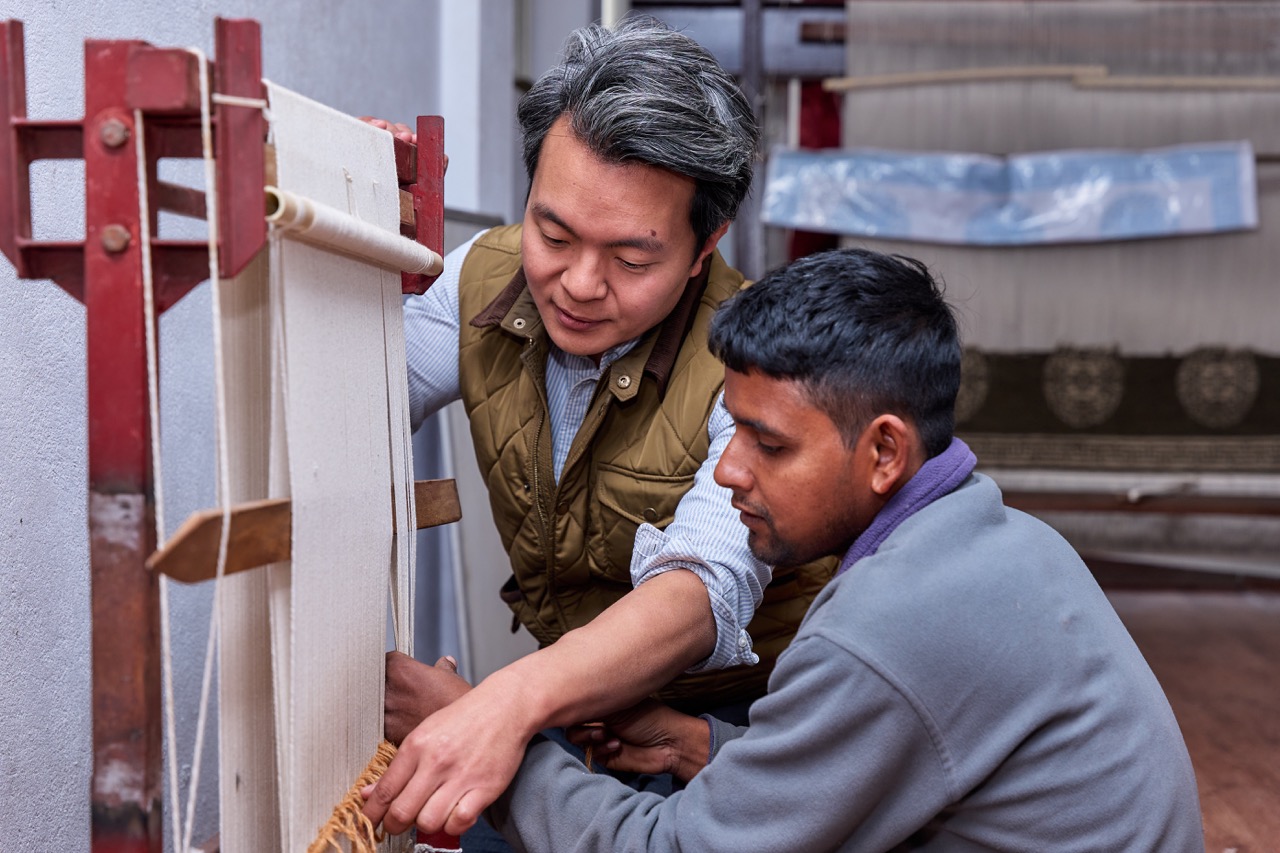
For consumers, these partnerships represent more than a design story. Each rug produced at Karuna reflects a production model that includes workers commonly excluded from the labour market, while upholding the technical precision and design standards expected in international markets. As co-founder Urgyen Wangchuk notes, “Today, we are training more than a dozen weavers with disabilities each year in the art of carpet weaving. Sustainable social impact can take place when it is woven into commerce. When you simply make rugs with Karuna, you help transform Nepal, and the rug industry as a whole.”
“Today, we are training more than a dozen weavers with disabilities each year in the art of carpet weaving. Sustainable social impact can take place when it is woven into commerce. When you simply make rugs with Karuna, you help transform Nepal, and the rug industry as a whole.”
— Urgyen Wangchuk, Co-Founder of Karuna
Looking Ahead: Scaling Inclusive Craftsmanship
Karuna is still young, but its ambitions extend into the long term. Karnor Carpets is currently developing a strategic plan for both Karnor and the Karuna Universal Weaving Facility, outlining a ten-year vision focused on becoming self-sustaining. Expanding the facility to accommodate more weavers with disabilities is a key priority. Together with EPSA-Nepal, the team is actively visiting villages across the country to identify and mobilise additional trainees with disabilities. New training rounds are planned, including a third cohort currently under preparation. While funding remains a challenge, partners are working to secure the resources needed to grow without compromising accessibility or working conditions. STEP’s role will continue to centre on fair-trade guidance, interpretation support for trainees with hearing disabilities, and orientations on Gender Equality and Social Inclusion and safeguarding—helping ensure that expansion does not dilute rights-based principles.
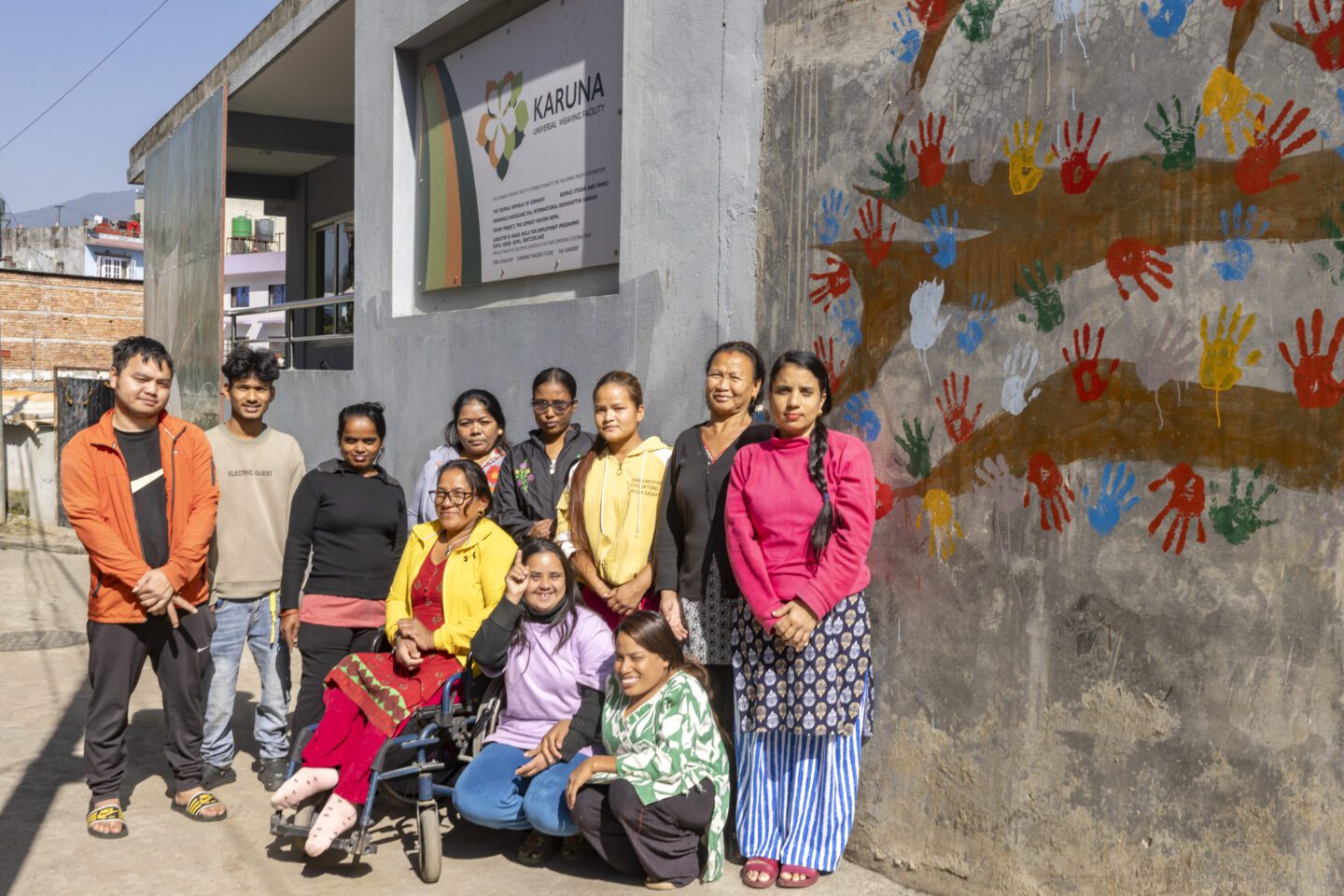
Yet even at this early stage, the facility offers a tangible example of what inclusive industry can look like: a place where architectural design, technical training, and international partnerships are aligned around one core idea: that people with disabilities have the right not only to work, but to thrive as skilled artisans at the heart of Nepal’s handmade rug sector. For Label STEP, Karuna shows that making protection and participation a shared responsibility is not an abstract goal. It starts on the ground, with workers who have historically faced barriers to formal employment and with workshops willing to redesign their spaces, systems, and expectations to welcome them in.

