
For generations, carpet weaving has been an important source of income for families across Afghanistan. Today, as many women face severe restrictions on their access to education, employment and public life, weaving remains one of the few livelihoods that many are still able to pursue. At the same time, years of economic hardship, human rights violations, uncertainty and limited access to services continue to place significant pressure on the wellbeing of weaving communities. Recognising that health extends beyond physical care alone, Label STEP together with Turquoise Mountain have partnered with Peace of Mind Association (PoMA) to strengthen mental health and psychosocial support within its community health programme. The initiative is supported by GIZ (Deutsche Gesellschaft für Internationale Zusammenarbeit).
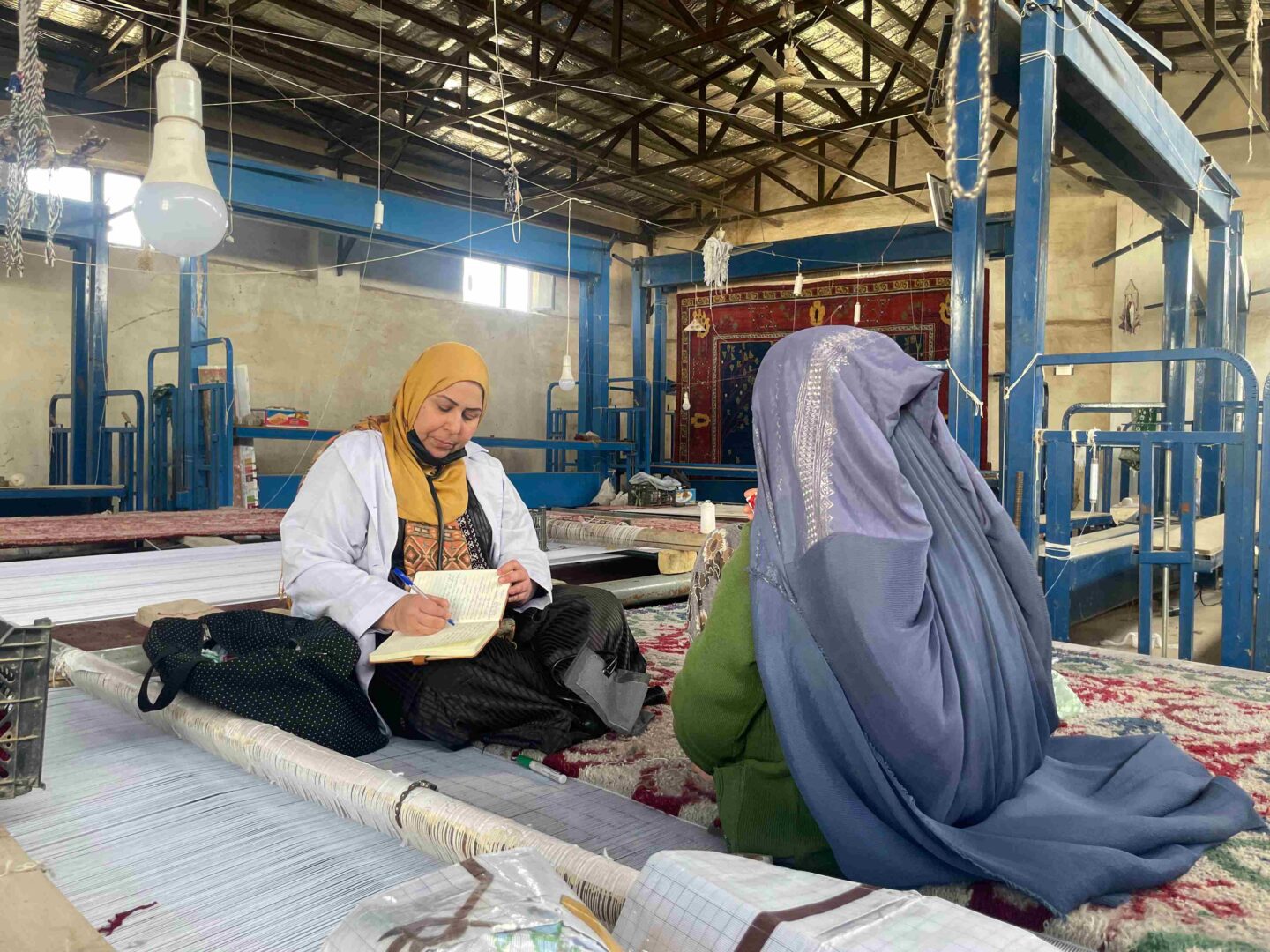
Five years after the change of power on 15 August 2021, the space available to women and girls in Afghanistan to study, work and participate in public life has continued to narrow. While international attention has shifted over time, the consequences of these restrictions remain part of everyday life for millions of women and their families.
New research from UN Women illustrates the impact on mental wellbeing: seven in ten Afghan women surveyed describe their mental health as bad or very bad, while 59% report that it has worsened over the past six months. More than half of women surveyed also report leaving their homes twice a month or less, illustrating how restrictions on mobility can further compound isolation. For organisations working directly with women and families, these findings underline why mental health and psychosocial support cannot be separated from wider questions of health, livelihoods and wellbeing.
“7 in 10 Afghan women surveyed describe their mental health as bad or very bad.”
— UN Women, Monitoring the Status of Women Survey, 2026
Supporting women weavers in Afghanistan means looking beyond working conditions alone. Alongside social compliance auditing, medical services and community empowerment programmes, Label STEP and its partners continue to invest in the wellbeing of the people behind handmade carpets.
The initiative builds on STEP’s long-standing community health programmes, which already provide basic healthcare, medical check-ups and first aid to weaving communities across Afghanistan. The MHPSS programme formed part of a one-year project implemented by Label STEP in cooperation with Turquoise Mountain and supported by GIZ, combining social auditing and community health activities for weaving communities. By integrating mental health and psychosocial support into this existing work, STEP is taking a more holistic approach to community healthcare. For the development and delivery of the MHPSS component, STEP partnered with Peace of Mind Association (PoMA), whose specialist expertise helped adapt internationally recognised guidance to Afghanistan’s local context.
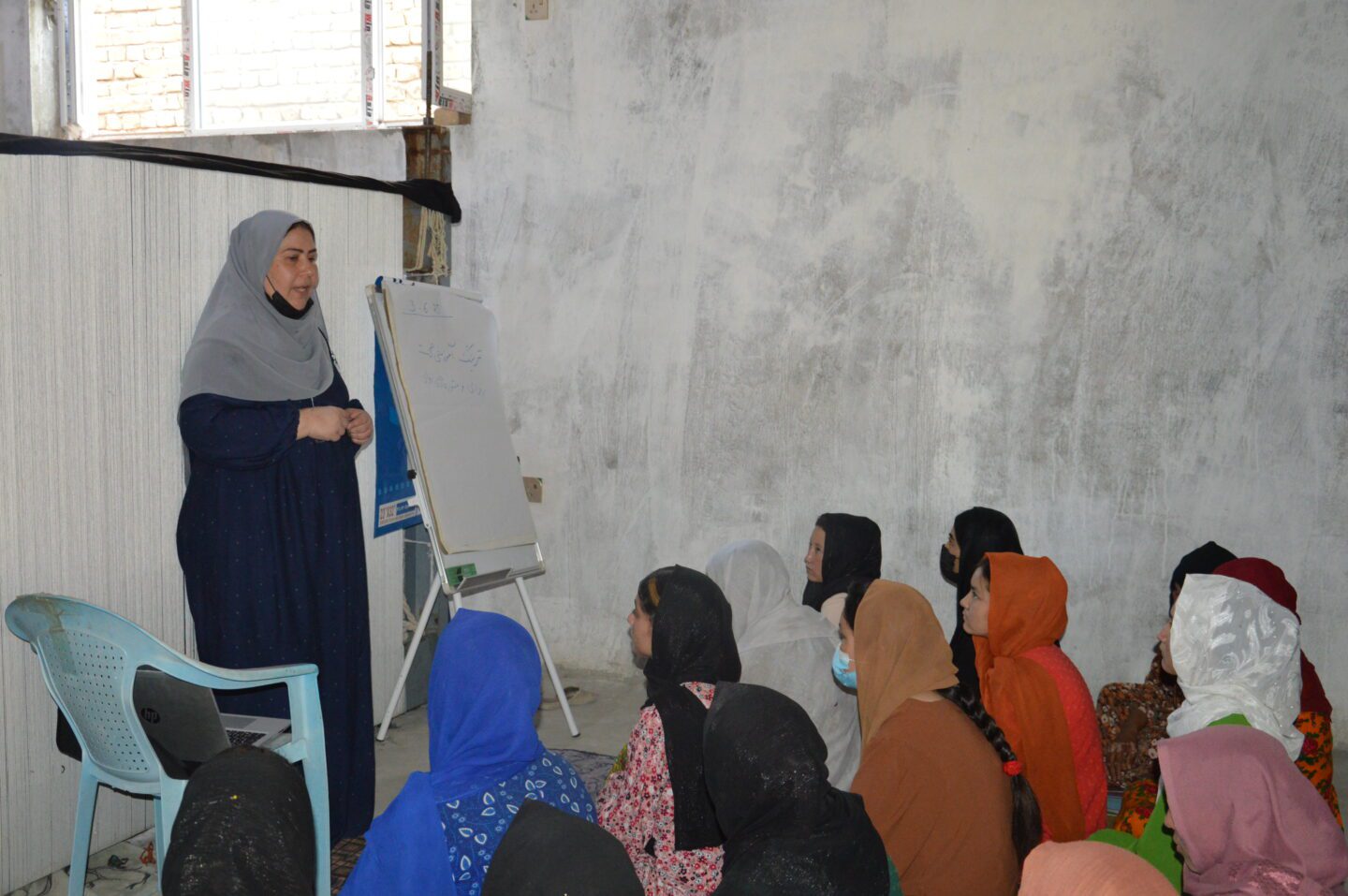
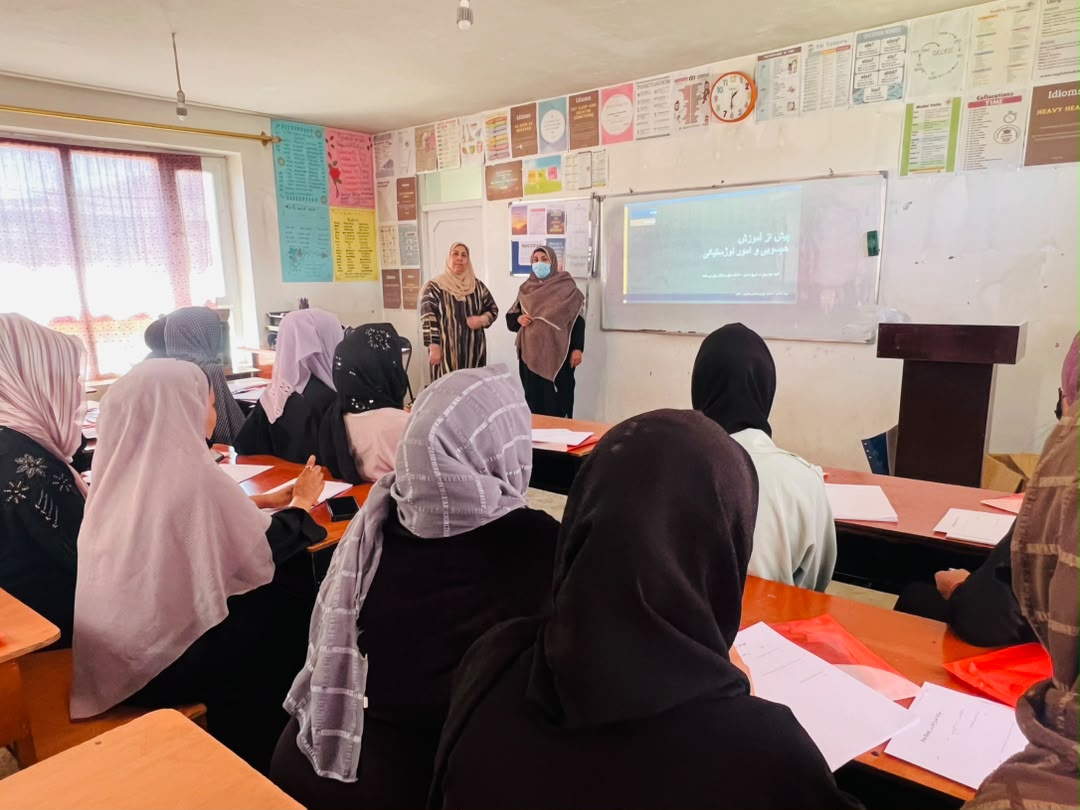
Under a Training of Trainers (ToT) model, PoMA’s Kabul-based clinical team trained STEP medical doctor Dr. Wahida to independently deliver the programme to 50 female community health workers working within weaving communities linked to Turquoise Mountain in Bamyan Province. Alongside a bilingual curriculum and practical training materials, PoMA also provides ongoing clinical supervision to support the quality and consistency of future trainings.
Practical skills for everyday community work
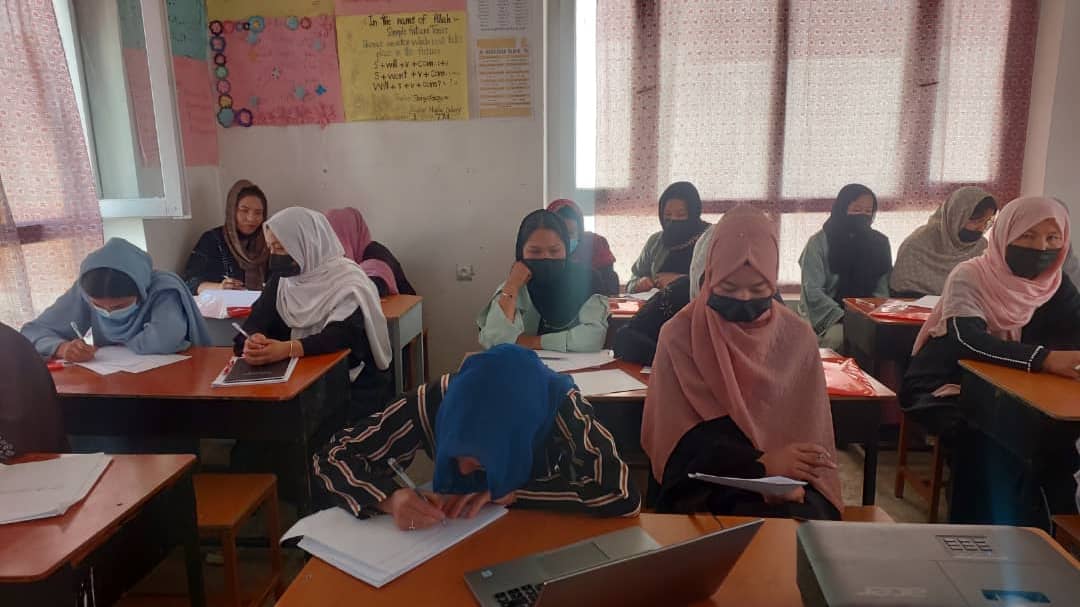
Community health workers (CHWs) are trained members of weaving communities—many of them weavers themselves—who provide basic healthcare, health education and first aid while serving as a vital link between families and STEP’s medical team. Building on this existing role, the five-day training equips them with practical skills in Mental Health and Psychosocial Support (MHPSS), including trauma-informed care, Psychological First Aid (PFA), grounding and stabilisation techniques, stress management and safe referral pathways. The training combines theory with practical exercises based on situations community health workers may encounter during household visits. Through role plays, case studies and simulations, participants learn how to apply these approaches in practice.
Rather than focusing solely on symptoms, trauma-informed care encourages community health workers to understand how difficult life experiences may affect a person’s wellbeing and to respond with empathy, respect and without judgement.
The programme follows evidence-based guidance developed by the Inter-Agency Standing Committee (IASC) and the World Health Organization (WHO), ensuring that community health workers are trained according to internationally recognised humanitarian standards while adapting these approaches to Afghanistan’s local context. The curriculum is grounded in the humanitarian principle of “Do No Harm”, ensuring that support is delivered safely, respectfully and in ways that avoid causing unintended distress.
Supporting those who support others
For Dr. Wahida, the training represents an important step towards strengthening community-based healthcare within Afghanistan’s weaving communities. She emphasises that mental health should be regarded with the same importance as physical health, as both directly influence “quality of life, the ability to work, learn, and human relationships.” Although mental health conditions are not always visible, she notes, they “can be as painful and debilitating as physical illnesses.”
The need for this support is closely linked to the realities many women in Afghanistan face today. “For many women, weaving has become far more than a traditional craft—it is one of the few opportunities left to earn an income and support their families,” says Masoud Shah, Country Representative for Label STEP Afghanistan. “When we speak with women in weaving communities, many tell us that losing access to education, work and public life has created enormous stress. Supporting mental wellbeing has therefore become just as important as supporting physical health.” While community health workers cannot change these circumstances, they can provide an important first point of support—helping individuals develop coping strategies, strengthening family support networks and facilitating access to appropriate healthcare when needed.
“For many women, weaving has become far more than a traditional craft—it is one of the few opportunities left to earn an income and support their families. Many tell us that losing access to education, work and public life has created enormous stress.”
— Masoud Shah, Country Representative, Label STEP Afghanistan
Building on their existing role within STEP’s community health programme, the training equips community health workers with the skills to recognise psychological distress, respond with empathy and Psychological First Aid (PFA), and make safe referrals when specialised care is needed. As Dr. Wahida explains, they learn to “listen to family members with respect and empathy.”
“Supporting mental health is as important as caring for physical health because both directly impact quality of life, the ability to work, learn and maintain human relationships.”
— Dr. Wahida
These skills can make a meaningful difference in everyday situations. A mother experiencing emotional distress in the postpartum period, for example, can be offered a safe space to talk, encouraged to draw on existing family support networks and referred for further care when appropriate. Likewise, if a child exhibits signs of psychological distress following a difficult experience, community health workers can support caregivers in responding with empathy and appropriate coping strategies while facilitating referral to specialised services when necessary.
Investing in women and building local capacity
The first phase of the programme equipped 50 female community health workers (CHWs) working within weaving communities linked to Turquoise Mountain in Bamyan Province. Through the training Dr. Wahida received, the programme was designed not as a one-off intervention, but as a sustainable approach that enables knowledge to remain within STEP’s local health team and be replicated through future training programmes.
Investing in female community health workers is particularly important, as they play a vital role in delivering healthcare to women, mothers and children during routine household visits. As trusted members of their communities, they are often among the first people women turn to with health concerns and are uniquely placed to provide support in a culturally appropriate and accessible way. Strengthening their knowledge and skills, Dr. Wahida explains, “improves the quality of services, increases families’ access to healthcare and enhances the health and wellbeing of the community.”
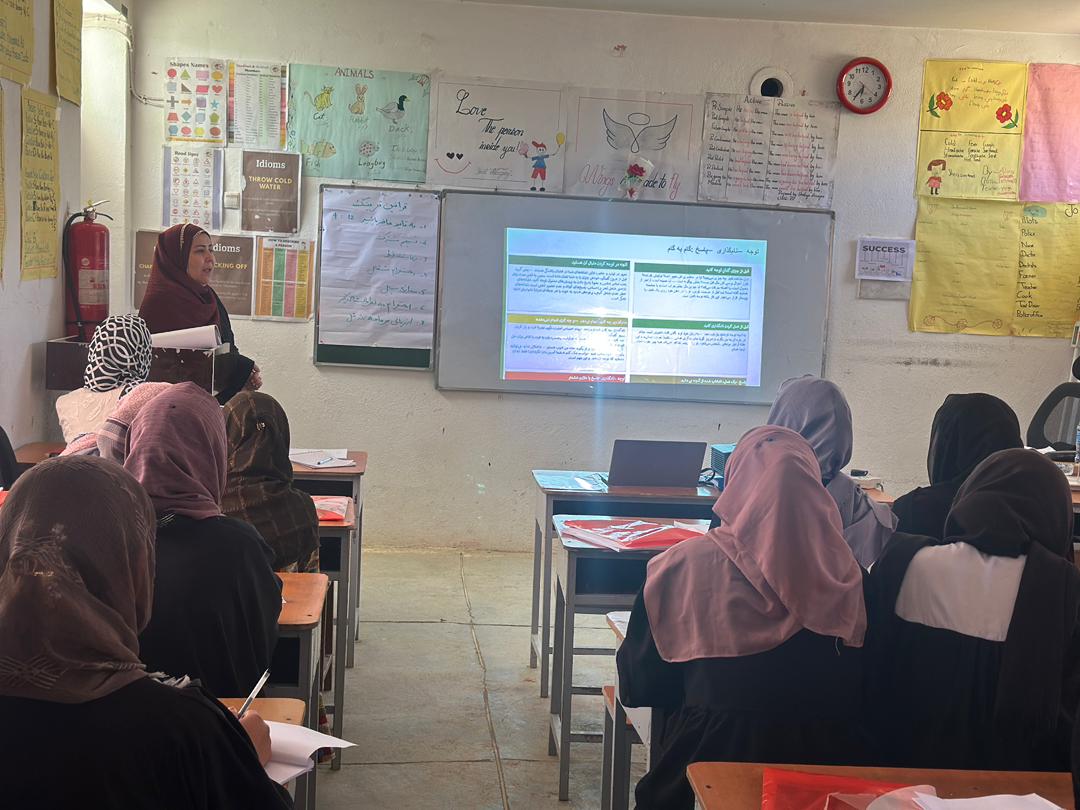
For many participants, the training expanded their understanding of healthcare by highlighting the close connection between physical and mental wellbeing. Alongside practical tools such as Psychological First Aid, grounding and stabilisation techniques, participants strengthened their communication skills and learned how to respond with empathy, build trust and support individuals experiencing psychological distress.
The impact of these skills extends beyond individual consultations. By strengthening the confidence and capacity of community health workers, the programme aims to improve access to compassionate, person-centred care while reinforcing existing support networks within weaving communities.
“Strengthening the knowledge and skills of female community health workers improves the quality of services, increases families’ access to healthcare and enhances the health and wellbeing of the community.”
Dr. Wahida
A foundation for the future
The first implementation of Label STEP’s Mental Health and Psychosocial Support (MHPSS) programme in Bamyan Province marked an important step towards integrating mental wellbeing into community-based healthcare for Afghanistan’s weaving communities.
While the initial project was completed in June 2026, its impact extends beyond the first training cycle. As new health projects are developed and funding becomes available, Label STEP hopes to further expand the Mental Health and Psychosocial Support programme within Afghanistan, strengthening local capacity and enabling more community health workers to provide compassionate, evidence-based support alongside the medical care they already deliver to weaving communities. Building on experience gained through similar initiatives in Pakistan and Nepal, the programme contributes to STEP’s broader commitment to holistic community healthcare.
Further Reading
UN Women Thematic Briefing Series: Five Years On: Afghan Women’s Futures at a Crossroads
“We are still here”: a day in the life of 12 Afghan women
The New York Times, The Women Running Businesses Under Taliban Rules (2026)
Community Health Care: Afghan Weavers Take the Lead in Crisis Response

